
Identifying Pine Trees
Today's post isn't the longest, but it will set you on the right track to learning how to identify pine trees.
The first sign that you have a pine tree is pine needles coating the ground. However, other conifer trees lose their needles as well, so it isn't a foolproof way to identify a pine tree.
Pine trees grow in an inverted cone shape and can be recognized by their bundles of needle-like leaves, which grow in clusters rather than in single needles emerging from the branch. Pines (genus Pinus) have needles in clusters (fascicles). Single needles are characteristic of spruce (Picea), fir (Abies), and cedar (Cedrus or Thuja), which are related but not pines.
Pine trees love the light, and when they grow too close together, they lose limbs as they fight for light. Over time, you can end up with 100-foot-tall trees that are bare except for the very top. These are not the ones you want when harvesting needles unless you have tree-climbing gear, and even then, I don’t recommend it. But you do you, boo.
 Groves of pine trees are bountiful around my area because of the paper market. Landowners plant pines, and once the trees are mature, they sell them for a good chunk of money —around 15 years later. They are easy to spot because of the uniform rows in which they are planted.
2 Needles=Red Pine
3 Needles=Yellow Pine
5 Needles=White Pine
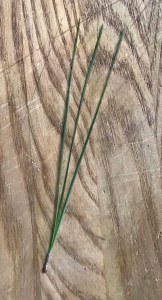
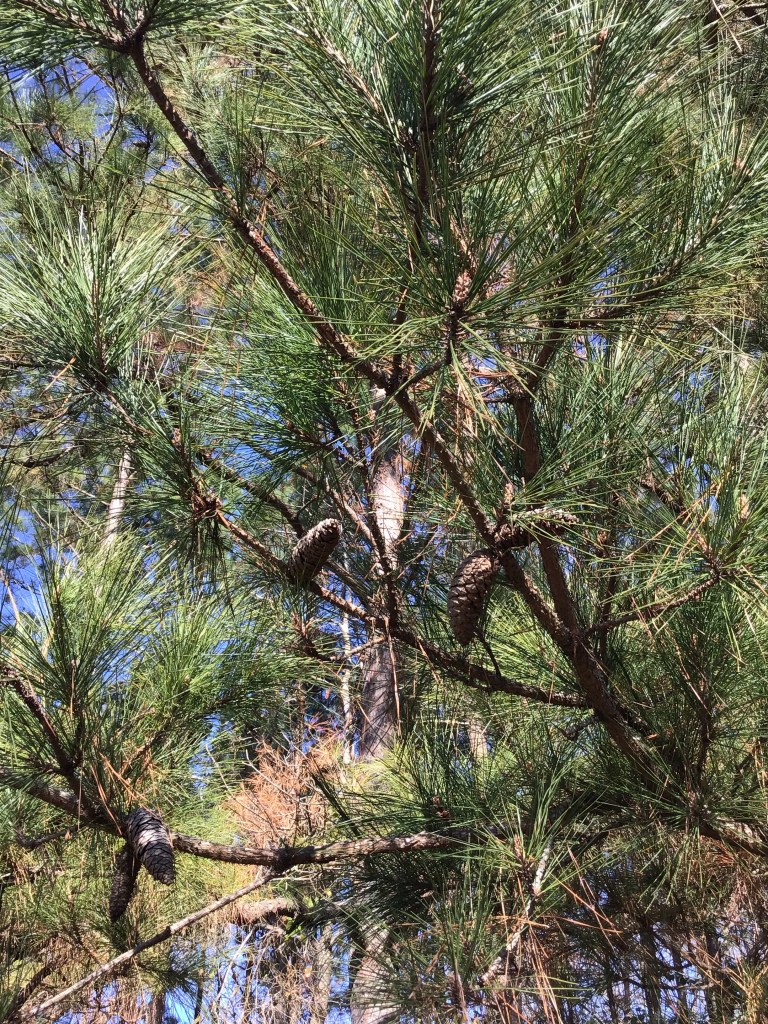


 These are all pictures of the pine trees around my house. Most were purposefully planted, making them easier to identify. This time of year, you can easily spot the evergreens amongst the oaks and other deciduous trees that are shedding their leaves, making hunting them down easier.
-Pine bark is pretty thick and scaly on most trees, but a few have thinner, flakier bark.
-Pine branches grow in spiral arrangements that can appear as whorls, and pine cones usually hang downward. Fir trees typically have upright cones.
-Look for clusters of leaves, not single leaves, even if they look similar.
Please note: Yew trees are a highly toxic plant, and while they look similar to the pine and other trees, it is not related. Be diligent in identifying trees and any other plant you are harvesting.
If you still have questions or don’t feel confident that you can pick the right tree, drop a comment or do some more research on your own. Never wildcraft a plant that you are not 100% on.